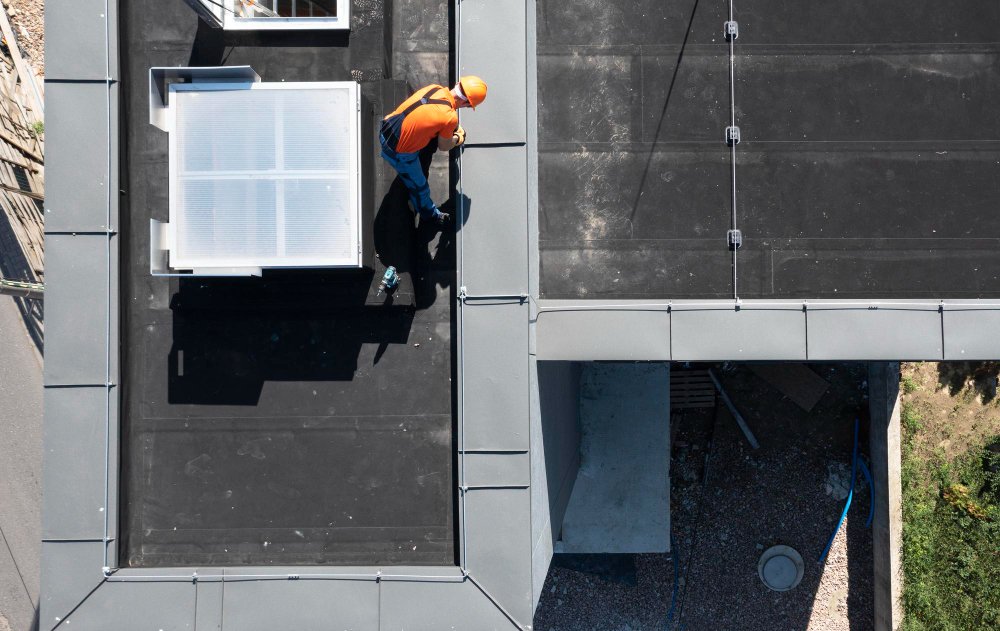
“A commercial roof should never be judged solely by how it looks from the street. Its greatest achievement is protecting everything beneath it—day after day, year after year.”
When a Roof Becomes More Than a Surface
Every commercial roof begins with a practical purpose, but over time it becomes something much greater. It shields offices where ideas become businesses, warehouses that safeguard valuable inventory, healthcare facilities serving communities, and retail spaces welcoming customers every day. Although much of its work happens unnoticed, the roof constantly responds to sunlight, wind, rain, temperature fluctuations, and the movement of mechanical equipment installed above it. As years pass, even the highest-quality roofing materials begin to show signs of natural aging. Membranes gradually weather, flashing experiences repeated expansion and contraction, drainage systems work through countless storms, and sealants slowly lose their flexibility. These changes rarely happen all at once. Instead, they accumulate quietly until small vulnerabilities begin affecting the larger roofing system. Replacing a commercial roof at the right time allows property owners to address those hidden concerns before they develop into costly disruptions. Rather than reacting to leaks or emergency repairs, they gain the opportunity to modernize the roofing assembly, improve energy efficiency, and strengthen the building’s long-term resilience. Today’s commercial roofing systems also provide benefits that extend beyond weather protection. Improved insulation contributes to more consistent indoor temperatures, reflective roofing surfaces help manage solar heat gain, and advanced waterproofing details reduce the likelihood of moisture intrusion around rooftop penetrations and structural transitions. What appears from ground level as a single roofing project is, in reality, the careful renewal of one of a building’s most valuable protective systems.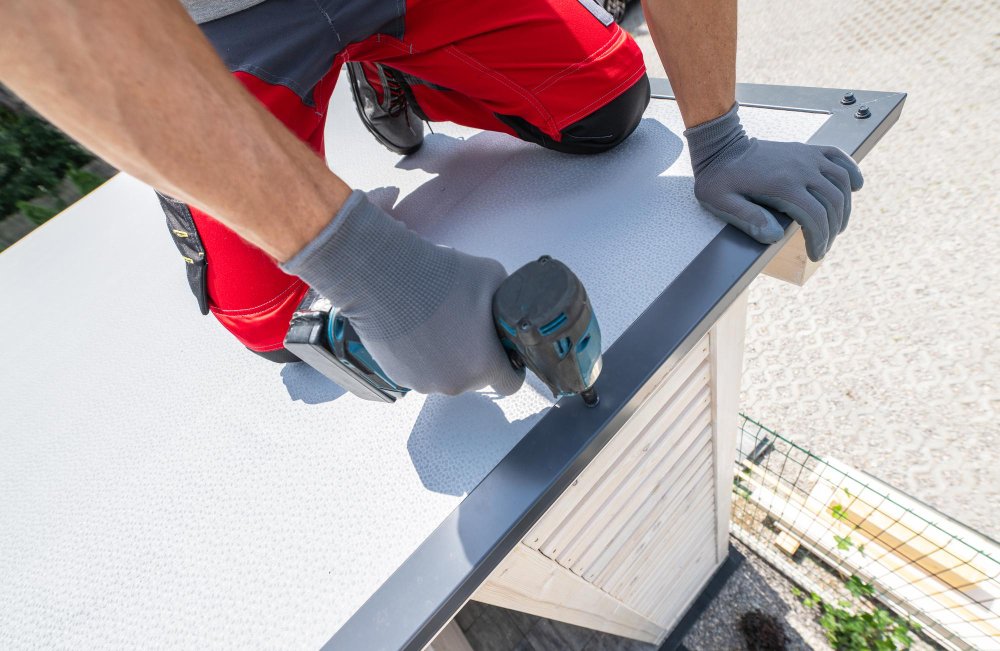
The Art and Engineering of Commercial Roof Replacement
Exceptional commercial roofing is created where craftsmanship meets engineering. Every successful project begins with a thorough understanding of the building itself—its structural design, drainage patterns, insulation requirements, rooftop equipment, and long-term operational needs. Before the first section of roofing is removed, experienced contractors evaluate every component that contributes to long-term performance. Roof decking is carefully inspected for structural integrity, insulation is assessed for moisture damage, flashing details are reviewed around walls and penetrations, and drainage systems are examined to ensure water leaves the roof efficiently during heavy rainfall. This thoughtful preparation allows the replacement process to become more than an installation. It becomes an opportunity to improve the building as a whole. Modern roofing materials are engineered to deliver outstanding durability while accommodating the natural movement of commercial structures. Whether the project involves reflective single-ply membranes, modified bitumen, or built-up roofing systems, every layer works together to create a complete weather-resistant assembly. Equally important is the precision of installation. Carefully welded seams, properly integrated flashing, accurately installed insulation, and meticulous attention to roof penetrations transform individual materials into a unified protective system capable of performing reliably for decades. Building owners also benefit from a smoother construction experience than many expect. Careful project planning minimizes disruption to daily business activities while allowing occupants to continue working safely throughout much of the installation process. For organizations seeking dependable roofing for office buildings, that balance between technical precision and operational efficiency becomes one of the greatest advantages of working with experienced commercial roofing professionals. Rather than viewing roof replacement as an unavoidable expense, many property owners discover that it represents one of the most valuable improvements they can make to the overall performance, efficiency, and longevity of their commercial property.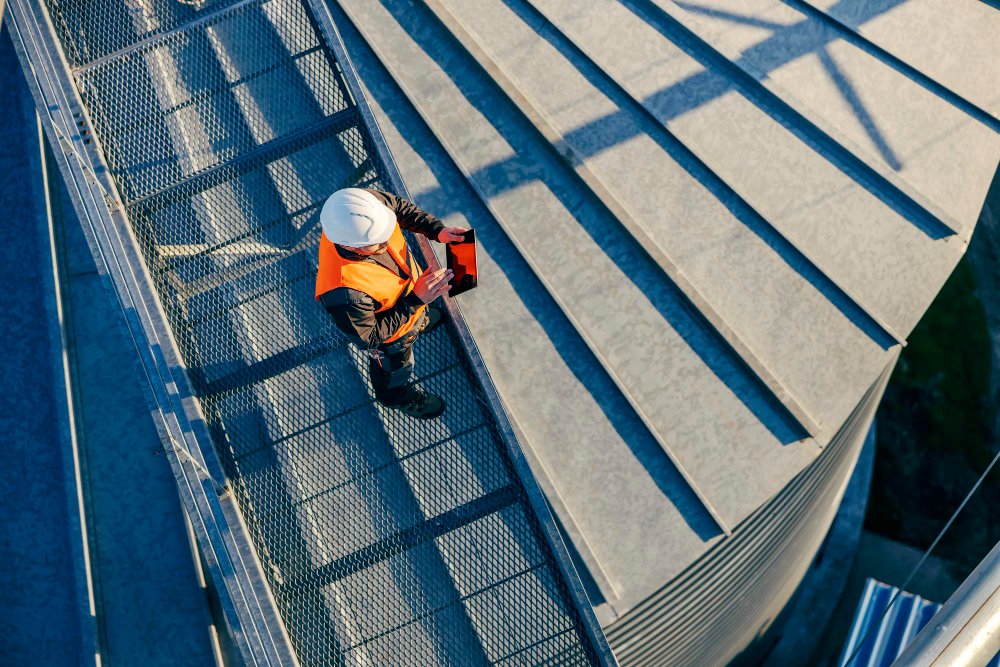
Materials That Shape Long-Term Performance
Every commercial roofing material tells a different story. Some are designed to maximize energy efficiency through highly reflective surfaces, while others are engineered to withstand constant rooftop traffic, demanding weather conditions, or specialized industrial environments. Selecting the right system is never about following trends—it is about understanding how the roof will serve the building for years to come. Modern single-ply membranes such as TPO and PVC have become popular for their clean appearance, excellent waterproofing performance, and reflective properties that help reduce heat absorption. EPDM continues to earn respect for its flexibility and durability, particularly on expansive commercial roofs exposed to seasonal temperature changes. Meanwhile, Modified Bitumen and Built-Up Roofing remain trusted solutions where exceptional puncture resistance and layered protection are essential. Yet the true strength of any commercial roofing system lies not in the material alone, but in how every component works together. Insulation supports energy performance, flashing protects critical transitions, drainage systems prevent standing water, and properly detailed penetrations preserve the roof’s waterproof integrity. Luxury in commercial construction is not defined by appearance alone. It is reflected in thoughtful engineering, precise installation, and materials chosen to perform consistently long after the project is complete.“The finest commercial roofs are designed not simply to endure the next storm, but to protect decades of business growth.”
The Confidence That Comes with Expert Craftsmanship
Replacing a commercial roof is rarely an isolated construction project. It is often part of a broader commitment to protecting valuable assets, maintaining business continuity, and preserving the long-term value of a property. For that reason, craftsmanship becomes just as important as the roofing materials themselves. Experienced commercial roofing professionals understand that every detail contributes to overall performance. A perfectly aligned membrane seam, carefully installed edge metal, accurately sealed penetration, or properly sloped drainage system may seem like small elements individually, yet together they determine how effectively the roof performs throughout its service life. Communication also plays a significant role. Successful projects are built on detailed inspections, transparent recommendations, realistic scheduling, and careful coordination that minimizes disruption for employees, tenants, and customers. The result is a roofing project that feels organized, predictable, and professionally managed from beginning to end. Perhaps most importantly, expert installation provides peace of mind that extends well beyond the final inspection. Property owners gain confidence knowing their investment has been protected by proven installation methods, quality workmanship, and a roofing system designed to perform under demanding commercial conditions. When experience guides every decision, quality becomes something you can rely on—not simply something you hope for.Read More in RSVP Home Blog
- Custom Closet for Your Cliff Cannon Home: Personalized Storage That Simplifies Life
 Learn how personalized closet systems in Cliff Cannon create organized, efficient living spaces.
 - Commercial Roof Replacement: Investing in Lasting Protection for Your Building
 A commercial roof replacement is more than a construction project—it’s an investment in the future of your property. This article explores how premium roofing materials, thoughtful engineering, and skilled craftsmanship work together to improve building performance, protect valuable assets, and deliver lasting peace of mind for commercial property owners.
 - Kitchen & Bathroom Cabinet Contractor in Clarksville, ID: Custom Storage Solutions for Every Room
 Learn how professional cabinet contractors in Clarksville, ID transform kitchens and bathrooms with personalized storage solutions.